The 2023 Canadian recession and what expect in the year ahead
Published on December 23, 2022

What happens to rent during a recession?
During a recession, the demand for rental housing may decrease as people lose their jobs or have reduced income. This can lead to lower rent prices or more incentives offered by landlords to attract tenants. However, the exact impact on rent prices will depend on the specifics of the recession and the local housing market. In some cases, rent prices may not be greatly affected by a recession, while in others they may decline significantly.
The situation we’re in here in Canada is somewhat of a unique one. Some of the key markers are high inflation, low housing stock and low unemployment. What the fed continues to do with rates and other measures will have a profound effect on where we find ourselves in the coming years.
What does CPI include and how does the fed determine whether they need to raise the rate?
The “basket of goods” the government uses to measure CPI represents the total spending of the average Canadian consumer. For example, Canadians spend approximately 16% of their household budget on Food, (which further breaks down in other categories), 27% on Shelter, and 19% on Transportation, etc.
The BOC uses this as one of the barometers to make their policy decisions (along with unemployment, GDP, balance of payments among others). If they see the CPI falling they know we’re headed in the right direction. Here’s what that chart looks like since their last policy decision:
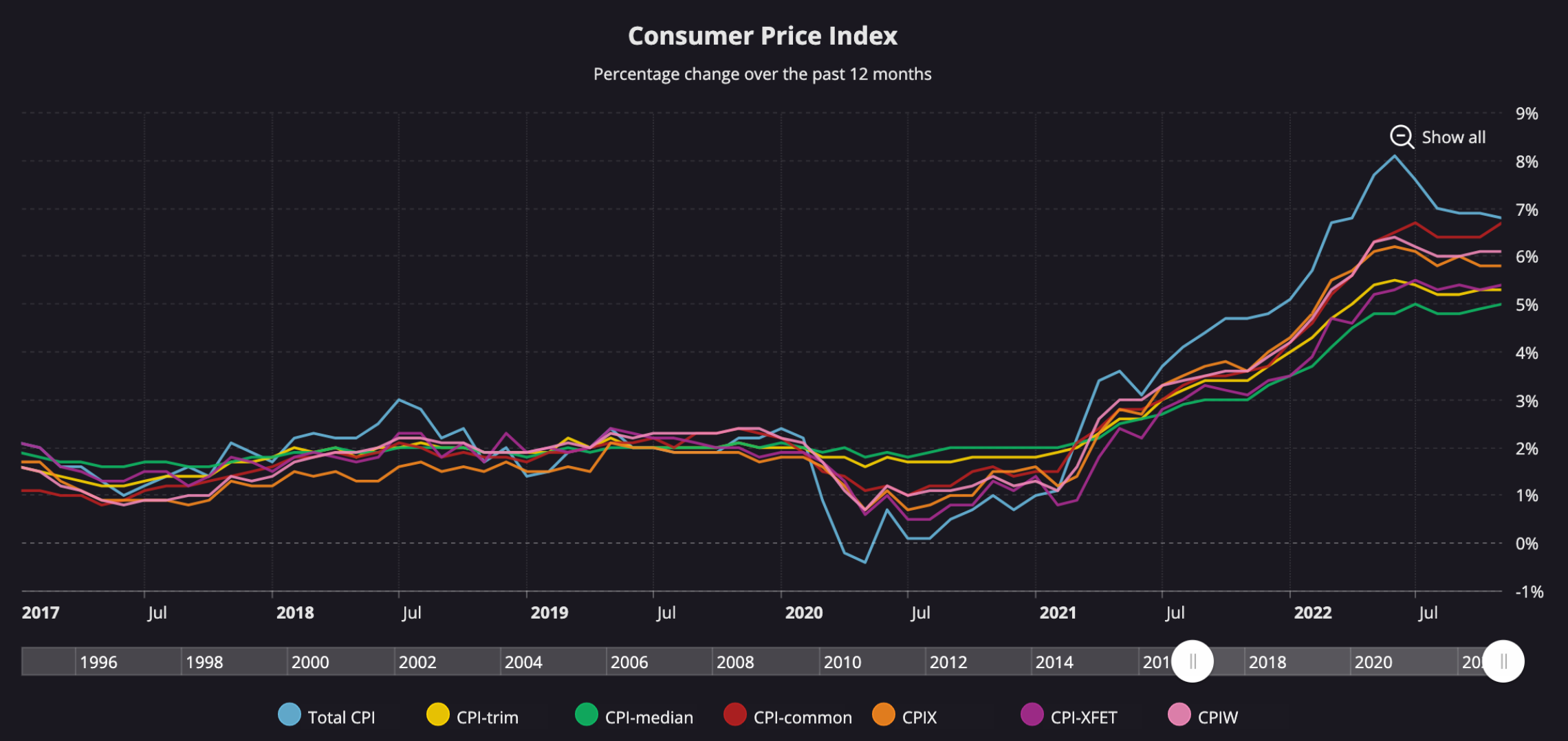
Source: Bank of Canada
The last 6 months shows CPI is declining but we’re no where near the 2% goal the fed is aiming for. The good news is CPI is a lagging indicator so the results of even heavy handed interest rate hikes will take some time to show up in the data.
This could provide some hope that the BOC will slow down with rate increases, especially since a few more rate increases may spur a lot of pain for home owners and renters alike. Higher interest rates will further push up mortgage payments and much of that will be passed on to the rental market.
In cities like Toronto and Vancouver, households are already spending more than 74% of income on rent. Anything above 30% is considered stretching so many renters may be on the cusp of unaffordability right now. The Canadian government is seeing this and offering programs like a $500 one-off federal payment to low income families but this may not be enough to weather the storm ahead.
Household Rent To Income (Ontario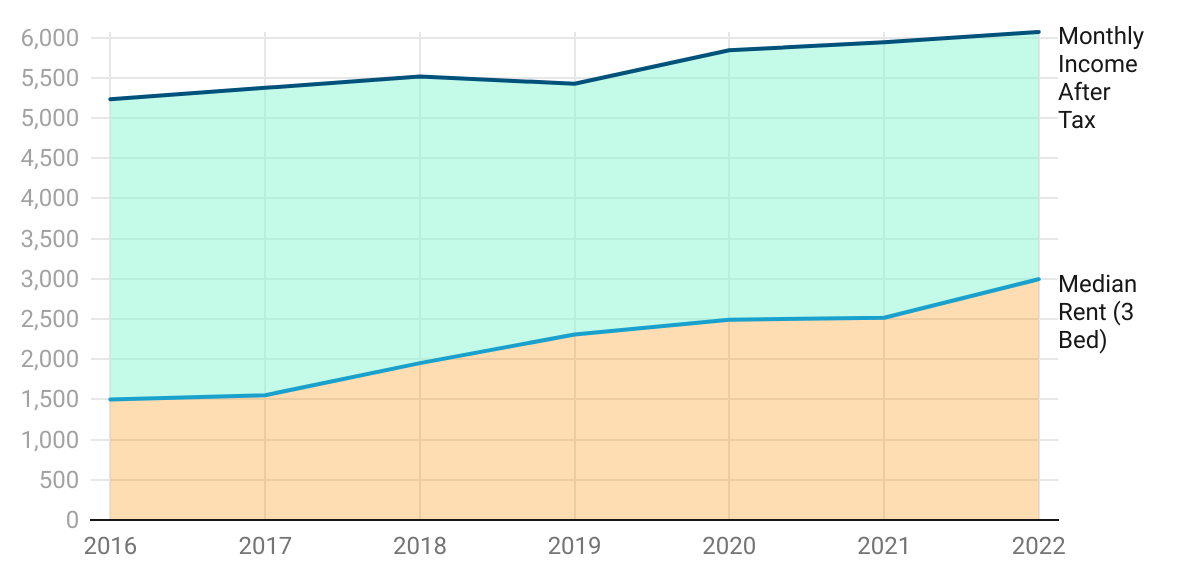
Source: Door Insight
Will it take a rental housing collapse to bring down rents?
Ultimately, if renters stop paying, we will see more landlords unable to afford to keep these rental properties. That scenario could be the beginning of a deeper recession which effectively hits the reset button on the housing market by further declining home prices. On the flip side, this could be a relief for renters as rents may slightly decline from their all-time highs as more affordable rental units come on the market.
How does inflation actually come down?
Inflation comes down when excess demand declines meaning consumption of goods goes down and businesses start lowering prices to compensate for that lower demand. What can help do this? One thing is unemployment. Canada’s historically low unemployment rate has been contributing to inflation according to the BOC governor Tiff Macklem.
“The tightness in the labour market is a symptom of the general imbalance between demand and supply that is fuelling inflation and hurting all Canadians.”
The feds are hoping the unemployment rate will come down meaning more individuals looking for work. Obviously, no one wants unemployment to rise but it’s affect on the economy would help contribute to lower inflation by constricting consumer spending.
The feds are essentially looking for an economic slowdown on all fronts. If you combine unemployment targets with the sustained rent increases due to higher rates, we could be in store for a housing apocalypse in the worst case scenario. The chances of a soft landing seem less and less likely in our opinion. Pain will need to be felt somewhere if the feds are determined in their pursuit of 2% inflation.